How to Avoid RCMP and FBI Fingerprint Rejection | Complete Guide to Clear Fingerprints
Fingerprint submissions play a critical role in background checks for immigration, employment, licensing, and travel purposes. Whether you are applying through the Royal Canadian Mounted Police (RCMP) in Canada or the Federal Bureau of Investigation (FBI) in the United States, fingerprint quality is the most important factor in determining successful processing.
Poor-quality fingerprints can lead to rejection, delays, and the need for re-submission. Understanding how fingerprint matching works, and how to avoid common errors, can significantly improve your chances of approval on the first attempt.
Understanding the Fingerprint Comparison Process
When digital fingerprints are submitted to either the RCMP or the FBI, they are processed through large biometric databases:
RCMP → National Repository of Criminal Records (Canada)
FBI → Integrated Automated Fingerprint Identification System (IAFIS / NGI)
Both systems search for a match or no-match result by comparing submitted fingerprints against millions of stored records.
If you need fingerprints for immigration, employment, citizenship, police clearances, or international applications, understanding the difference between these two methods can help you choose the right option.
How Fingerprints Are Actually Matched
Fingerprint identification is not based on general patterns alone. While fingerprints are often categorized as loops, whorls, arches, or double loops, these patterns are only used for classification, not identification.
True identification is based on minutiae, which are the unique ridge characteristics found in every fingerprint.
These include:
- Ridge endings
- Bifurcations (splitting ridges)
- Enclosures or eyelets
- Short ridges
- Ridge dots or islands
- Other fine structural deviations
It is the number, location, and relationship of these minutiae points that make every fingerprint unique.
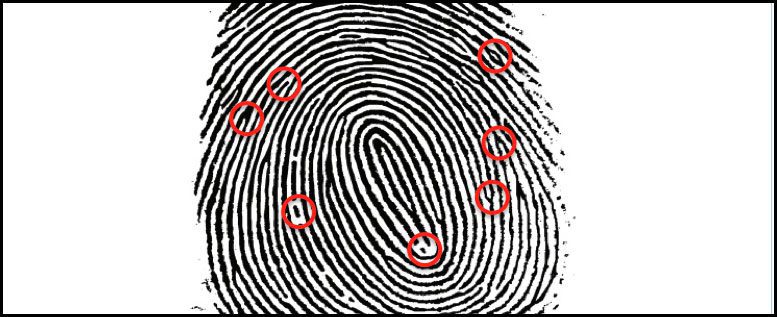
The photomicrograph above illustrates the friction ridges (shown in black) and the furrows (shown in white) that make up a fingerprint. The red circles highlight ridge characteristics, also known as minutiae, which include ridge endings, bifurcations, enclosures (eyelets), short ridges, ridge dots (islands), and other unique ridge formations.
These minutiae are the individual features that fingerprint examiners and automated fingerprint identification systems (AFIS) compare when determining whether two fingerprints belong to the same person. General fingerprint patterns such as loops, whorls, and arches are used only for classification and are not sufficient for positive identification. The number, location, and relationship of minutiae points are what make every fingerprint unique and form the basis of fingerprint identification worldwide.
The Role of AFIS and FBI NGI Systems
Both Canada and the United States use advanced biometric systems:
RCMP – AFIS
The Automated Fingerprint Identification System (AFIS) quickly compares submitted fingerprints against national criminal databases in Canada.
FBI – NGI System
The Next Generation Identification (NGI) system performs similar large-scale biometric comparisons in the United States, with enhanced image quality analysis and broader biometric capabilities.
Why Image Quality Matters
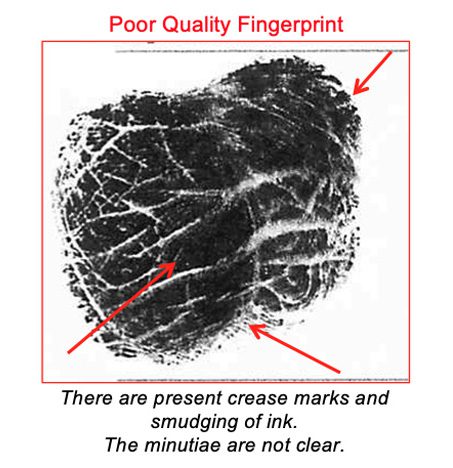
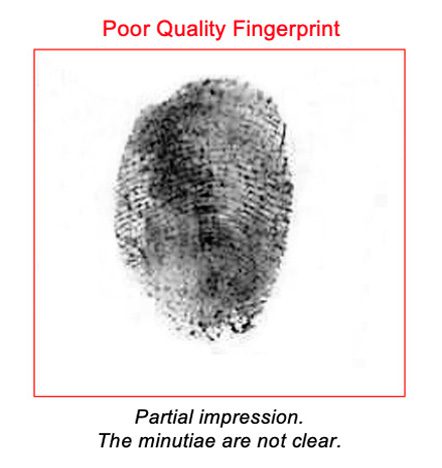
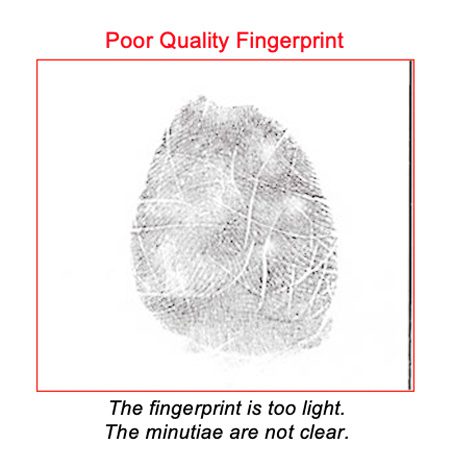
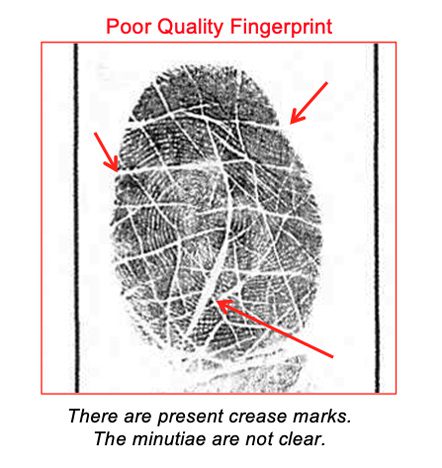
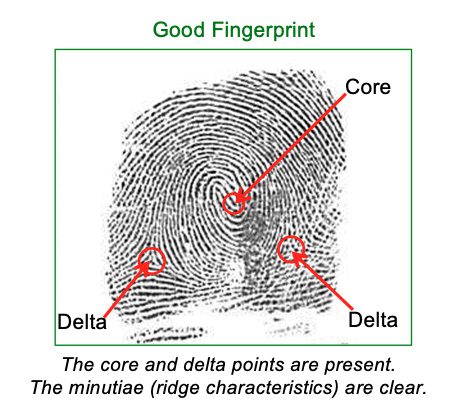
Even though these systems are highly advanced, they still depend entirely on clear, complete fingerprint images. If the ridge details are unclear or incomplete, the system may be unable to extract usable minutiae, leading to rejection or failure to match.
Tip: One of the most common and avoidable reasons for fingerprint rejection is choosing an untrained or inexperienced technician. Fingerprinting is a precise process that requires proper knowledge of rolling technique, pressure control, ink or live-scan handling, and quality assessment before submission.
Untrained providers often produce fingerprints that are too light, over-inked, smudged, or incomplete from nail to nail—issues that can lead directly to rejection by RCMP or FBI systems. Always choose a professional service with experience in forensic-level fingerprinting and familiarity with official submission standards to ensure your prints meet acceptance requirements the first time.
What “Clear Enough” Means
For fingerprints to be accepted by the RCMP or FBI, they must:
- Show clear ridge detail
- Be fully captured from nail edge to nail edge
- Contain sufficient minutiae points
- Be free of smudging or distortion
- Be properly rolled or scanned
Even small quality issues can affect automated matching results.
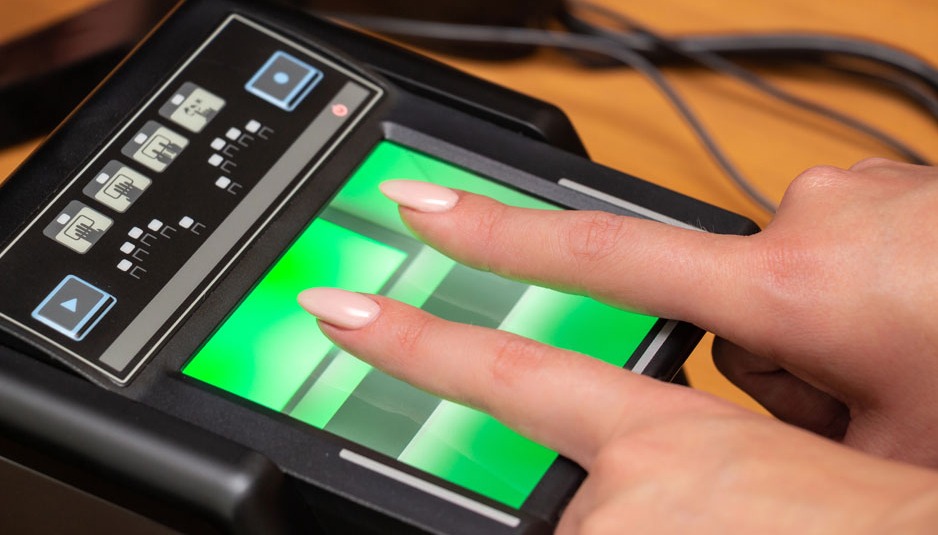
In Canada, RCMP-accredited fingerprinting agencies use certified live-scan systems to submit fingerprints electronically to the RCMP for criminal record checks and other screening purposes.
Common Causes of Fingerprint Rejection
Physical Causes
- Dry or cracked skin
- Excessively sweaty hands
- Scars, cuts, or burns
- Worn ridges due to age or manual labor
- Exposure to chemicals (bleach, solvents, detergents)
- Medical skin conditions
- Missing or damaged fingers
Technical Causes
- Excess ink or overly dark prints causing smudging
- Insufficient ink resulting in faint impressions
- Poor-quality ink or outdated equipment
- Uneven pressure during rolling
- Incorrect finger placement
- Partial or incomplete prints
- Inexperienced technician handling the process
How to Avoid Fingerprint Rejection
Prepare Your Skin
- Moisturize dry hands daily for 7–10 days before fingerprinting
- Stay hydrated
- Avoid harsh chemicals before your appointment
For Sweaty Hands
- Wash hands with cool water before fingerprinting
- Dry thoroughly before scanning
- Keep hands clean and dry during the process
Improve Print Quality
- Ensure proper pressure during rolling
- Avoid over-inking or under-inking
- Use fresh, high-quality fingerprint ink or certified live-scan devices
Protect Worn Fingerprints
- Reduce exposure to chemicals and heavy manual work before appointment
- Use gloves when possible
- Allow technician to take multiple impressions if needed
Live Scan vs Ink Fingerprinting
Modern fingerprinting systems increasingly rely on live-scan technology, which offers:
- Higher image clarity
- Immediate quality feedback
- Ability to retake poor impressions instantly
- Reduced rejection rates
Ink fingerprinting, when not done correctly, is more likely to result in rejection due to smudging or incomplete impressions.
Why Professional Fingerprinting Matters
Many fingerprint rejections occur not because of the applicant, but because of improper technique or poor-quality equipment.
A trained fingerprint technician ensures:
- Correct finger positioning
- Proper rolling technique
- Balanced pressure application
- Immediate quality review
- Compliance with RCMP and FBI standards
Why Choose Worldwide Forensic Services Inc.
Worldwide Forensic Services Inc. is a trusted Canadian fingerprinting provider with over 37 years of forensic fingerprint experience.
We specialize in high-quality fingerprint capture for both RCMP and FBI submissions.
Our advantages include:
- Professional live-scan fingerprinting services
- Expertise in difficult fingerprint cases (worn, dry, or damaged ridges)
- Free resubmission support if fingerprints are rejected
- Optional pre-review of fingerprint forms by email
- Forensic-level quality control before submission
We understand exactly what RCMP and FBI systems require for successful processing.

Final Thoughts
Fingerprint identification systems used by both the RCMP and FBI are highly advanced, but they depend entirely on one factor: clarity of fingerprint data.
By understanding how minutiae are used in fingerprint comparison and by ensuring proper preparation and professional capture, you can greatly reduce the risk of rejection and delays.
A properly taken fingerprint is not just a formality—it is the foundation of accurate biometric identification.
Share this article
Disclaimer: The information provided in this article is for general informational and educational purposes only. While Worldwide Forensic Services strives to keep the content accurate and up to date, laws, regulations, government policies, procedures, processing times, and documentation requirements may change without notice and may vary depending on individual circumstances and the requesting authority. This article does not constitute legal, immigration, or professional advice and should not be relied upon as a substitute for advice from the appropriate government agency or qualified professional. Readers are encouraged to verify current requirements with the relevant authority before making decisions or submitting applications.